A corporate event can shape how your brand is remembered long after the last guest leaves. That is exactly why knowing what to look for in a corporate event venue matters so much. The right space does more than hold a crowd – it sets the tone, supports your agenda, and gives your guests an experience that feels polished, intentional, and worthy of the occasion.
In Los Angeles, expectations are high. Whether you are planning a leadership meeting, company celebration, product launch, client dinner, or holiday party, your venue has to work hard behind the scenes while still delivering a strong visual impression. A beautiful room gets attention, but a well-run event earns trust.
What to Look for in a Corporate Event Venue First
Start with the guest experience, not just the square footage. A venue may look impressive in photos, but if parking is difficult, the entrance feels confusing, or the room layout fights your agenda, the glamour fades quickly. Corporate guests notice details. They notice whether check-in feels organized, whether audio is clear, and whether the environment feels elevated enough for the brand you are presenting.
Location should be one of your first filters. In a market like Los Angeles, convenience can make or break attendance. A centrally located venue with accessible routes, nearby accommodations, and practical parking immediately removes friction for guests, executives, vendors, and presenters. If your event includes VIPs or out-of-town attendees, the arrival experience matters even more. You want people to feel welcomed, not worn out before the program begins.
The exterior and entrance also deserve more attention than many planners give them. For corporate events, first impressions begin curbside. A grand arrival, polished lobby, and professional staff presence signal that guests are entering an event with intention and quality behind it. If your company values prestige and presentation, the venue should reflect that before anyone even steps into the main room.
Layout, Flow, and Flexibility Matter More Than You Think
A corporate event venue should fit your format, not force you into one. That sounds obvious, but it is one of the most common mistakes in venue selection. A room that works beautifully for a banquet may not be ideal for a networking mixer. A space designed for presentations may fall flat during a festive company celebration.
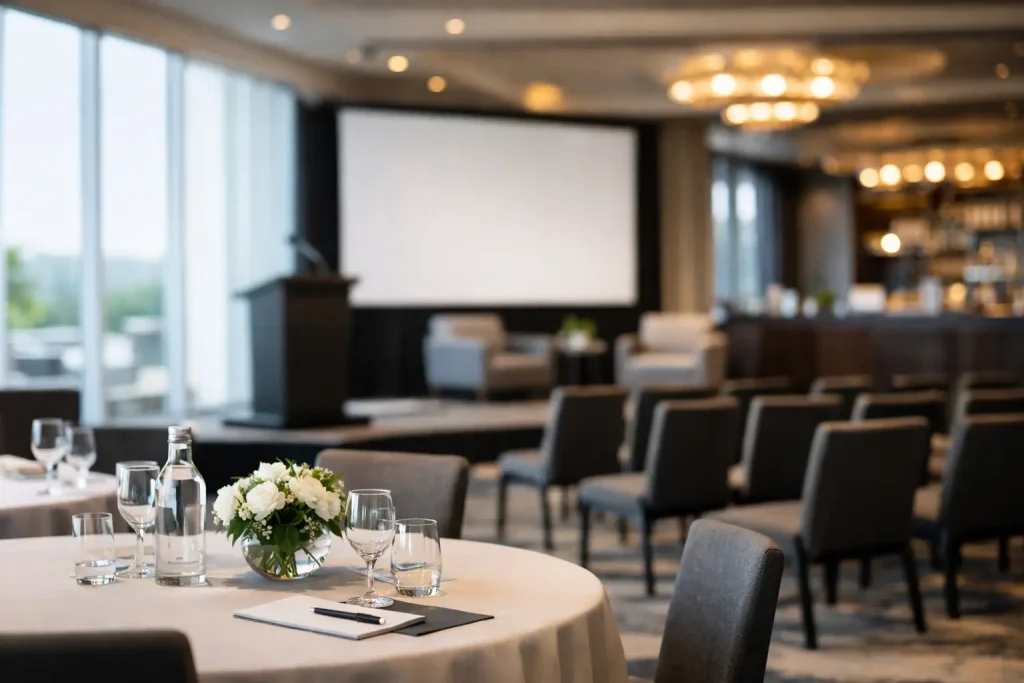
Ask how adaptable the room is. Can it shift from theater seating to banquet rounds? Is there enough space for staging, branded backdrops, cocktail areas, or breakout moments? Can the layout support both formal programming and casual conversation? Flexibility is often what separates a standard venue from one that can truly carry a multi-layered corporate event.
Flow matters just as much as capacity. A room that technically holds your guest count can still feel cramped if the furniture placement is awkward or if key areas bottleneck during check-in, buffet service, or transitions. Guests should be able to move comfortably, network naturally, and stay engaged without feeling squeezed into the wrong footprint.
If your event includes executives, speakers, or honored clients, ask about private holding areas as well. Green rooms, prep spaces, or VIP lounges can make the event feel more composed and professional. They also help your team manage timing and logistics without disrupting the guest-facing experience.
Technology Should Support the Show
For many corporate events, audiovisual quality is not a bonus. It is the backbone of the experience. If microphones fail, screens are too small, or lighting makes presenters look washed out, the entire event can feel underpowered. This is especially true for brand launches, award programs, sales meetings, and events with filmed content.
A strong venue should be able to support your production needs with confidence. That includes sound, screens, projectors or LED displays, lighting control, and reliable power access. If you are presenting videos, running a keynote, or using branded visuals, ask detailed questions early. Do not assume every venue is equally prepared.
The best venues also understand that AV is not just technical – it is emotional. Good lighting creates energy. Crisp sound commands attention. A clean stage setup gives your speakers authority. In a luxury setting, production should feel intentional and refined, not patched together at the last minute.
If the venue offers in-house production support, that can be a major advantage. It often means faster troubleshooting, smoother coordination, and fewer moving parts for your team to manage. For companies that want a more elevated experience without juggling multiple vendors, a full-service venue can save time and reduce stress.
Service Can Make the Entire Event Feel Premium
A stunning room with inattentive service never feels truly upscale. Hospitality is one of the clearest signs of venue quality, especially for corporate clients. You want a team that is responsive before the event, organized during setup, and polished in front of guests.
Pay attention to how the venue communicates during the inquiry process. Are they timely, clear, and solution-oriented? Do they ask smart questions about your goals, timeline, and audience? A strong venue partner is not simply renting out a room. They are helping shape an event that reflects your company well.
This is also where bundled services become valuable. Venues that can coordinate layout, production, timing, décor, and media coverage often create a more composed result than a pieced-together event team. For hosts who want convenience without sacrificing style, that kind of support is worth serious consideration. Red Carpet Event Center Los Angeles is one example of a venue model that blends luxury space with production and planning support, which can be especially appealing for companies that want one polished point of contact.
Staffing should match the tone of your event. A client appreciation dinner needs a different feel than a holiday party or internal training session, but professionalism should always be present. The right team knows when to be discreet, when to be proactive, and how to keep the event moving without making guests feel managed.
Brand Alignment Is Not Optional
A corporate venue is part of your brand presentation. If the room feels dated, generic, or visually disconnected from your company image, guests will feel that mismatch immediately. The venue does not have to look like your office. In many cases, it should feel far more elevated. But it should still support the impression you want to leave.
For some companies, that means sleek and modern. For others, it means formal, glamorous, and camera-ready. If your event will be photographed or filmed, the visual backdrop becomes even more important. Clean sightlines, elegant finishes, quality lighting, and a striking focal point all help create images that feel valuable long after the event ends.
This is especially relevant in Los Angeles, where image and experience often go hand in hand. A venue with red-carpet appeal, upscale design, and a cinematic atmosphere can turn a standard corporate gathering into something guests genuinely remember. That kind of setting works particularly well for award nights, media-facing events, executive receptions, and branded celebrations where appearance matters.
Do Not Overlook Food, Timing, and Logistics
Even the most glamorous venue has to perform on practical details. Ask how food and beverage are handled, how early vendors can access the space, and what the timeline expectations are for setup and breakdown. A corporate event usually runs on a tighter schedule than a private celebration, so venue logistics need to be crystal clear.
You should also ask about restrooms, accessibility, climate control, and noise levels. These are not flashy topics, but they affect comfort in a major way. A room that is too warm, too loud, or difficult to navigate will distract from your message.
Cost deserves a careful look too. The lowest rental rate is not always the better value if it excludes basic production, staffing, or furniture. On the other hand, an all-inclusive package is only worth it if the quality matches the price. The smartest decision usually comes from comparing total event value, not just the initial venue fee.
What to Look for in a Corporate Event Venue Before You Book
Before signing anything, walk the space with your actual event in mind. Picture your guests arriving, checking in, finding their seats, networking, watching presentations, dining, and leaving. That mental run-through will reveal far more than a pricing sheet ever could.
Ask yourself a simple question: does this venue make your event feel bigger, sharper, and more memorable? If the answer is yes, you are likely looking at the right partner. The best corporate venues do more than provide a room. They create an atmosphere where your company can show up with confidence, host with style, and give every guest a premiere-worthy experience.