
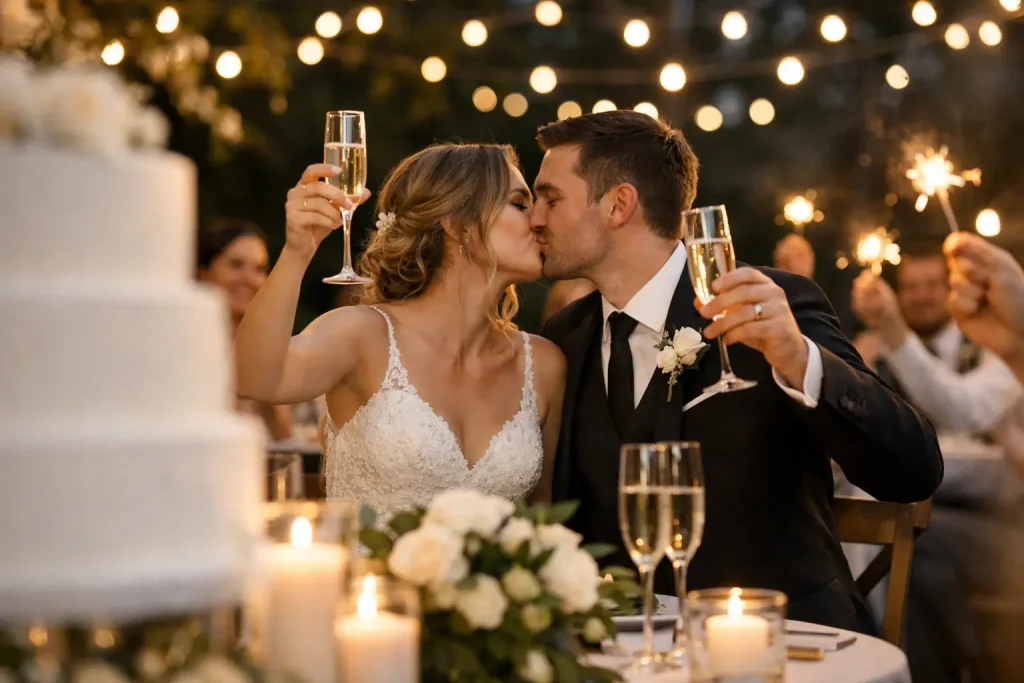
The most unforgettable wedding receptions do not feel rushed, over-scripted, or like guests are waiting for the next announcement. They feel effortless. This wedding reception timeline guide helps Los Angeles couples create that polished, celebratory flow – from the first champagne toast to the final red-carpet exit – while leaving room for real joy, photos, and spontaneous moments.
A reception schedule is not about controlling every minute. It is about protecting the experience you have invested so much to create. When dinner arrives while it is still warm, speeches happen while guests are seated, and the dance floor opens at exactly the right moment, the entire night feels elevated.
Start With the Reception You Want Guests to Remember
Before assigning times, decide what deserves the spotlight. A formal, black-tie evening with a plated dinner has different pacing than a lively family celebration with a buffet, live entertainment, and a packed dance floor. Neither is better. The right timeline reflects your priorities, your guest count, and the energy you want in the room.
For many couples, the biggest mistake is trying to include every tradition. A grand entrance, first dance, parent dances, welcome toast, dinner blessing, speeches, cake cutting, bouquet toss, garter toss, wardrobe change, photo sessions, and a send-off can all fit – but not all need their own separate production moment.
Choose the moments that feel personal. Then give those moments enough time to shine. A luxury reception should feel curated, not crowded.
Wedding Reception Timeline Guide: A Five-Hour Flow
Five hours is a popular reception length because it gives guests time to dine, celebrate, and dance without letting momentum fade. The sample below assumes a 5:00 p.m. cocktail hour and a 6:00 p.m. reception start. Adjust the clock for your ceremony, sunset photos, cultural traditions, or venue access times.
5:00-6:00 p.m. – Cocktail Hour and Portraits
As guests enjoy cocktails, passed appetizers, and conversation, the newlyweds can complete family and wedding party portraits. This hour is also an ideal time for your venue team to reset the ceremony space if needed and ensure the reception room is photo-ready.
Do not underestimate the value of this transition. Guests are relaxed, hungry, and happy to mingle. A signature drink, refined lounge seating, and beautiful lighting set the tone before anyone enters the main celebration.
If you want to join cocktail hour, complete as many formal portraits as possible before the ceremony. Even 15 minutes with your guests can make the night feel more personal.
6:00-6:15 p.m. – Grand Entrance and First Dance
Invite guests into the reception room first. Once everyone is seated or gathered around the dance floor, bring in the wedding party and make your entrance as newlyweds. This is your premiere moment, so let the music, lighting, and introductions feel intentional.
Move directly into your first dance while the room is already focused on you. It creates a cinematic opening and eliminates the need to pull guests away from dinner later. If you are including parent dances, continue with them here or save them until after the main course, depending on the rhythm you prefer.
6:15-7:15 p.m. – Welcome, Blessing, and Dinner Service
Once the entrance energy settles, welcome guests and begin dinner. For a plated meal, this is the window where timing matters most. Your catering and coordination teams need a clear plan so every table is served efficiently and speeches do not interrupt service.
A brief welcome or blessing before dinner works beautifully. Keep it warm and concise. Long remarks at this point can leave guests waiting for their meal and quietly checking the time.
Buffet and family-style dinners usually need more time than plated service, especially with a larger guest count. If that is your format, consider releasing tables in an organized order and keeping the atmosphere lively with music rather than trying to schedule formal events during the first rush to the buffet.
7:15-7:40 p.m. – Toasts With Everyone’s Attention
Toasts belong after most guests have been served and before the dance floor becomes the main attraction. People are seated, glasses are filled, and the room is naturally attentive.
Three speeches are usually plenty: perhaps a parent, a maid or matron of honor, and a best man or another meaningful person. Ask speakers to aim for three to five minutes each. A heartfelt toast lands harder when it is focused, personal, and short enough for guests to stay present.
Your DJ, emcee, or coordinator should know the speaking order, have microphones checked in advance, and cue the room before each toast. Small production details are what turn a sweet moment into one that feels polished.
7:40-8:00 p.m. – Cake Cutting and a Photo Moment
Cake cutting is often treated as a quick obligation, but it can be a beautiful visual transition. Place it where guests can see it, use flattering lighting, and give your photo and video team a clear view. Afterward, dessert can be served while the dance floor opens.
If you have a champagne tower, cultural dessert tradition, outfit change, or a private sweetheart moment planned, this is often the best place for it. The key is to group photo-worthy moments together rather than stopping the party every 15 minutes.
8:00-9:30 p.m. – Open the Dance Floor
This is where the night shifts from elegant reception to full celebration. Open the dance floor with a high-energy song that reflects you as a couple, then let your DJ build from there. The first 20 minutes are especially important. Keep the dance floor occupied with music people recognize and love.
Avoid scheduling too many announcements during this stretch. If you are doing a bouquet toss, anniversary dance, cultural performance, or surprise dance, place one featured moment around 8:45 p.m. Then let the music take over again.
At Red Carpet Event Center Los Angeles, lighting, sound, room layout, and photo-ready décor can work together to make this part of the night feel like a Hollywood celebration rather than a standard banquet hall dance set.
9:30-10:00 p.m. – Last Dance and Grand Exit
The final half hour should feel intentional, not like the lights suddenly came on. Announce last call for dessert or late-night bites, invite guests to collect send-off items, and give your photographer time to prepare for the exit.
A private last dance is a meaningful option for couples who want one quiet song alone in the room while guests line up outside. It gives you a breath between the rush of the reception and the final farewell.
For the exit itself, confirm venue rules and cleanup needs in advance. Sparklers are not always permitted, especially indoors or in dense urban areas. Ribbon wands, LED foam sticks, flower petals, or a glamorous photo studio farewell can create the same visual impact without adding unnecessary complications.
Build In Time Buffers Without Losing the Energy
A professional timeline always has breathing room. Family photos run long. A guest may need a quick wardrobe adjustment. Dinner service can take 10 extra minutes. Traffic in Los Angeles can delay a vendor arrival.
The answer is not to pad every section until the night feels slow. Instead, protect two or three flexible windows. Cocktail hour has built-in movement. Dinner service has natural conversation. Open dancing can absorb a brief delay better than a formal sequence can.
Your coordinator should also have a private version of the timeline with vendor arrival times, setup deadlines, photo priorities, meal service cues, and key contacts. Guests only need to experience the magic. Your production team needs the precision behind it.
Timing Choices That Change the Entire Reception
The size of your guest list changes nearly everything. A 75-person reception can move through entrances, dinner, and toasts quickly. A 250-person event needs more time for seating, food service, group photos, and guest movement.
Your meal format matters too. Plated dinners look beautifully formal and create predictable timing, while buffet service can feel abundant and social but generally needs a longer service window. Cultural traditions may deserve an extended spotlight rather than being squeezed between dinner and dancing.
Photography is another trade-off. Golden-hour portraits are worth planning for, especially in Los Angeles, but leaving your own reception for 30 minutes can reduce the time you spend with guests. Consider a first look or pre-ceremony portraits if being present at cocktail hour matters to you.
Give the Night a Strong Finish
Your reception timeline should make space for the people who came to celebrate you, not just the traditions on a checklist. Prioritize a beautiful entrance, an unhurried meal, meaningful words, and enough open dancing for the room to feel alive.
When every transition is thoughtfully timed, your wedding does more than run on schedule. It gives your guests a night that feels glamorous, generous, and worthy of its own standing ovation.